Church in Vietnam

January 29, 2026

Avatar photo

It would be a fairly easy transition for an American Catholic to move to Vietnam given the prevalence of English spoken and the visible presence of Catholic churches here. The Portuguese brought Christianity with them when they arrived in the 1500s, and their influence was reinforced by the French a few centuries later. Protestants didn’t arrive until the 20th century, and are still a small presence, but Catholics make up a surprisingly large percentage of the population (for Asia) at about 6%. (Buddhism is only about 5%, with the majority of the population claiming either no religion or a folk religion.) There is a large Catholic church here in Hoi An which we visited last week since they have a weekly service in English. Prior to this, I’d only visited Catholic churches for weddings and funerals – never for a regular mass. I was interested to see what the similarities and differences might be between Lutheran and Catholic worship services.

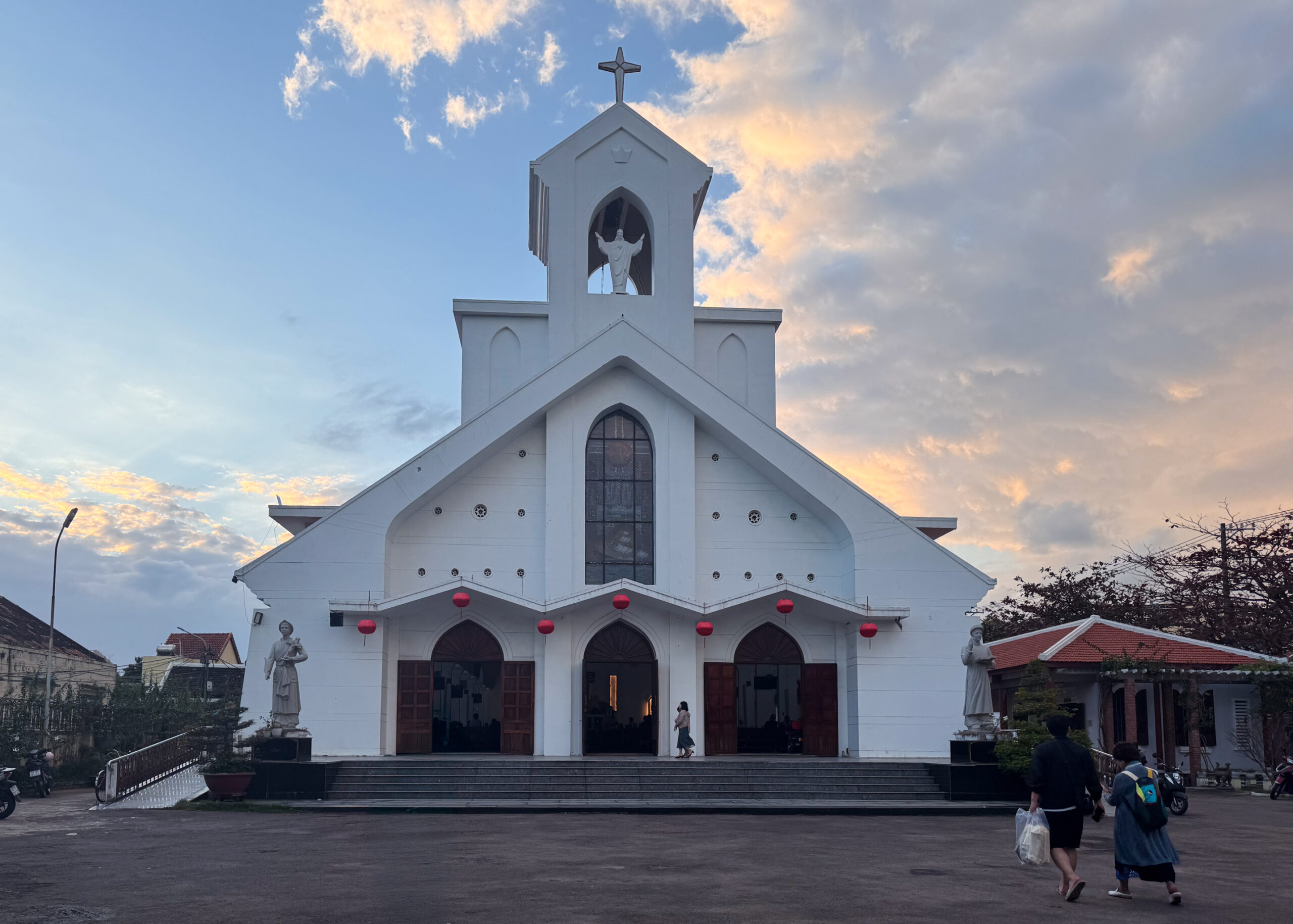
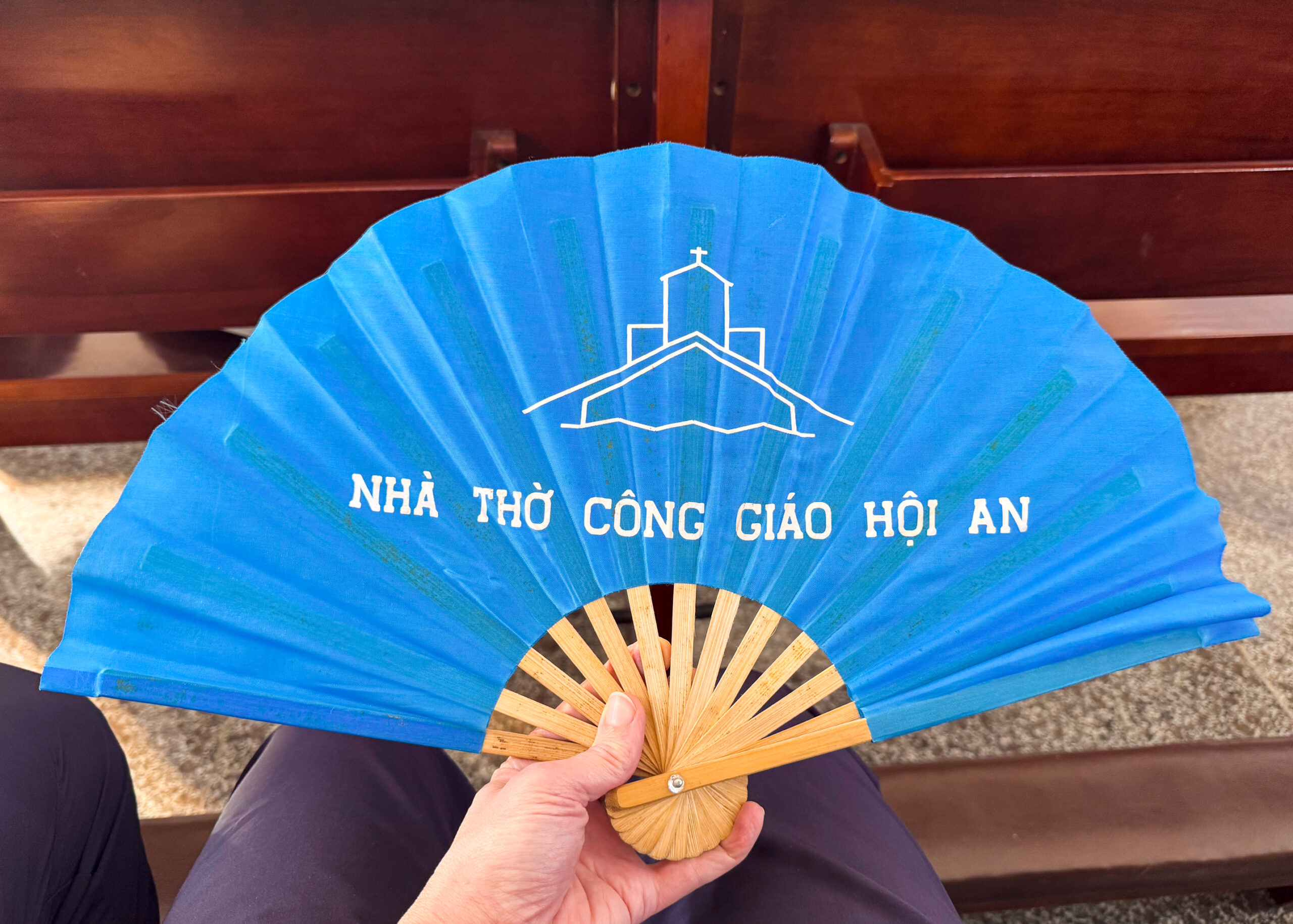
The exterior of Hoi An Catholic Church and one of the fans that was held in the back of the pews, important with no AC!

The sections of the service, even the words that were being spoken and sung, were very similar to what I would expect in a Lutheran church, which I suppose is not surprising since Lutherans long ago began as reformed Catholics. The Lutheran tradition, and it seems the Catholic one, both use the psalms and other well known passages of scripture like the Magnificat as a base for their liturgies with some small differences in language possibly arising from different translations of the bible.

There were three easily noticeable differences between this Catholic mass and Lutheran services.

  1. As with a Lutheran service, we began with a confession that we are all sinners who have failed to live according to God’s will and need his forgiveness. Where a Lutheran pastor would then say, “In the stead and by the command of our Lord, Jesus Christ, I forgive you all your sins,” the priest said that together with Mary, the saints, and all the congregation, he prays that God will forgive our sins. This felt a little less reassuring to me.
  2. The sermon lasted, at most, five minutes. It seemed like the priest had just finished laying out the topic for his message, then said Amen and stepped down for the pulpit. I don’t know if this is typical for Catholic masses, or a result of English being the priest’s second language and therefore more difficult to write a sermon in.
  3. Communion. I don’t know if it is practiced this way in all Catholic churches, but the most noticeable difference here was that the priest blessed and partook of both the bread/body and wine/blood, then distributed only the bread/body to the members of the congregation. There are other less visible differences between the two churches’ teachings about communion, but this one was easy to see.

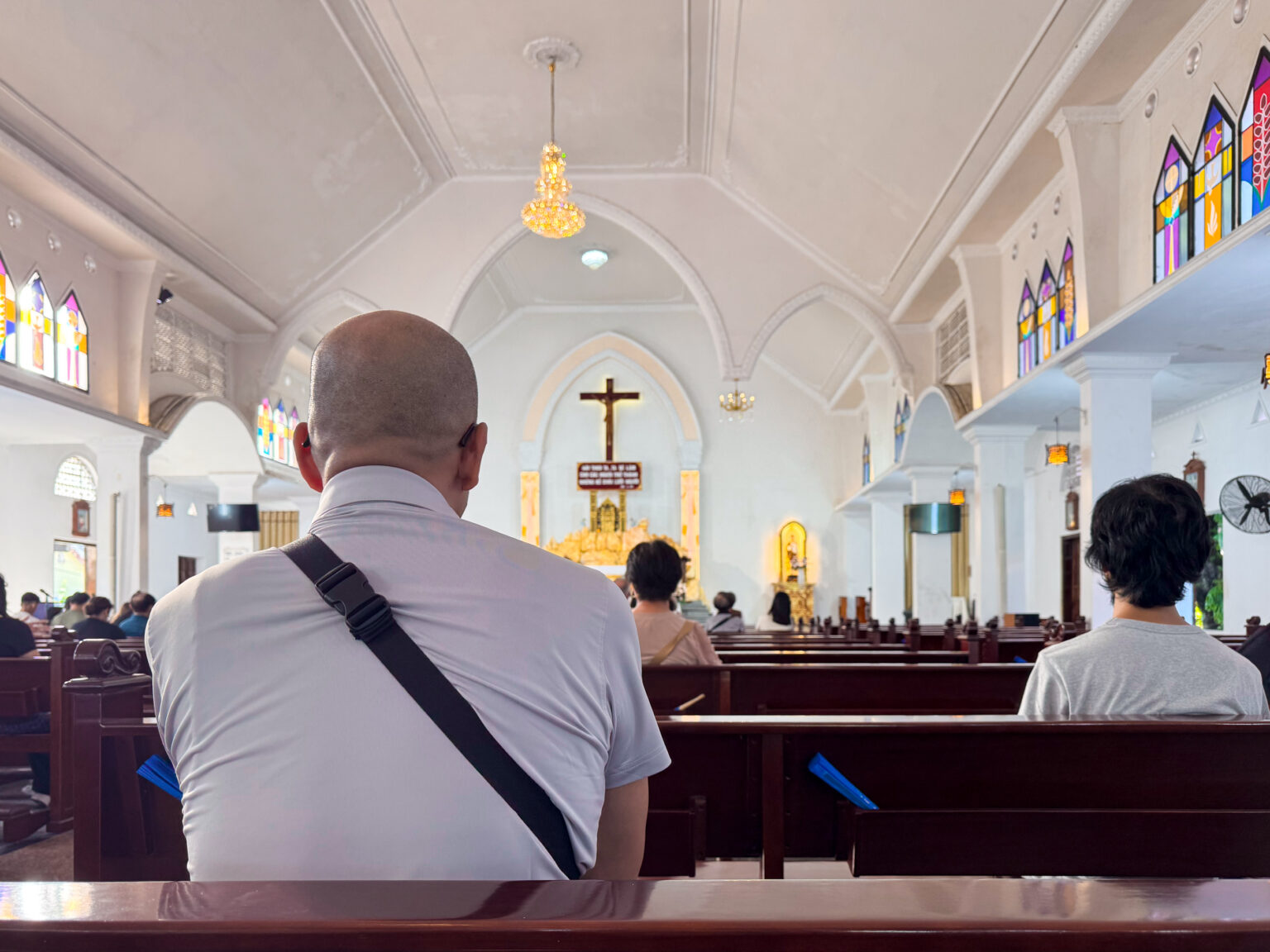
I think the most surprising thing about Hoi An Catholic Church was how well attended the service was. They have several masses each week, most of them in Vietnamese, and I would have assumed that it would be attended primarily by Western tourists or expats, but that did not seem to be the case. I would estimate that there were between 50 and 100 in attendance, most of them appearing to be Asian. The priest, cantor, and altar boys are Vietnamese, and the lector was either British or Australian (I’m not good at deciphering accents). Everything was in English only, with readings and responsaries all projected onto screens in English.


How do I follow you?

Want to keep up with our latest blog posts when we add them? The best place to do that is on Facebook.  Like and follow our page: Boy vs Girl Slow Travel on Facebook.  We post our blog articles there when they are released.  Facebook well let you know when we have new ones.

Where have we been?

Latest posts about !

Search Blog Posts