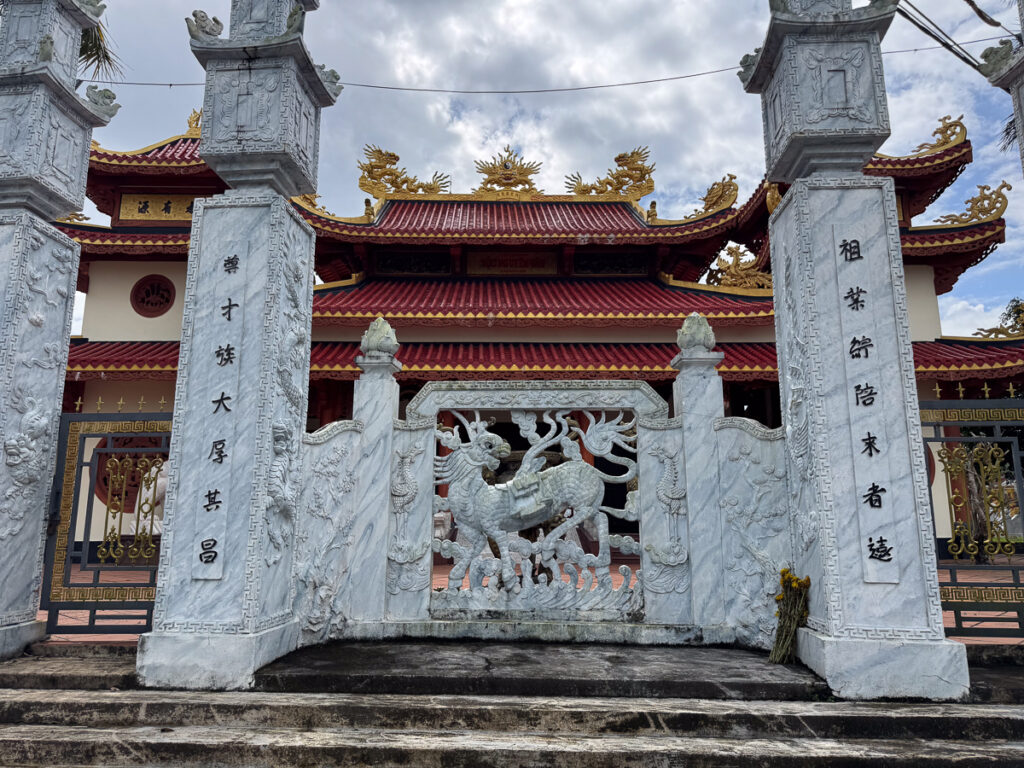
The influence of China on Vietnam is still here based on what I see in the communities. For example, while you don’t see many ornate Buddhist temples here like in Thailand, what you do see are neighborhood shines. Many of which are very impressive in their ornate decorations and size. My understanding is that these bring together aspects of Animism, Taoism, Buddhism and ancestor worship. The ornate decorations always appear very Chinese with lions and dragons, including writing using Chinese characters (Hanzi).
Fun fact: In the distant past the Vietnamese language was spoken, but with no written analog. Under Chinese rule, they adopted Chinese characters and used them for writing their language. Later, when the French came, they adapted the language to use a Latin based character set, which is what they use today. I’m told that no one aside from scholars understand the Vietnamese written using Chinese characters. People who understand traditional Chinese, I’m told, can sometimes understand basic words but can’t make out the grammar since it’s not Mandarin or Cantonese.
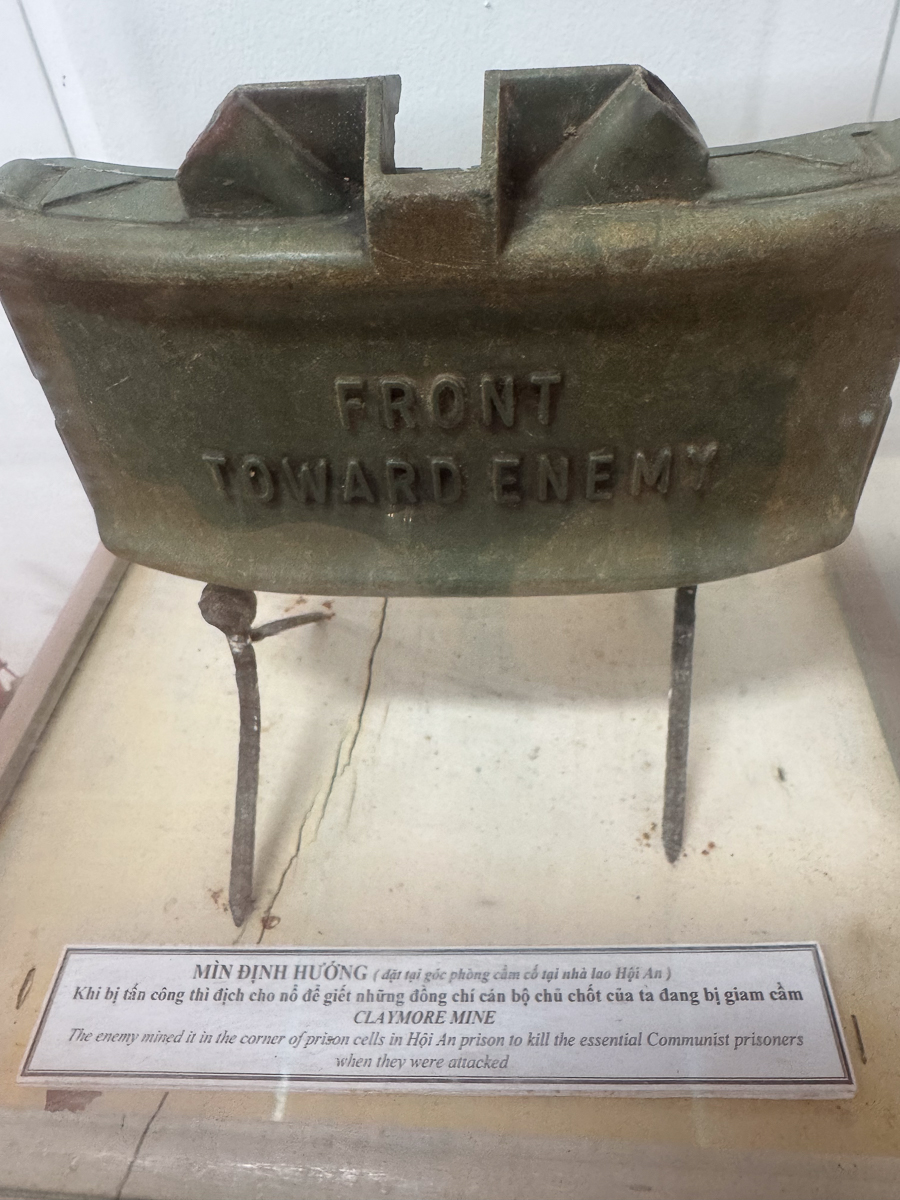
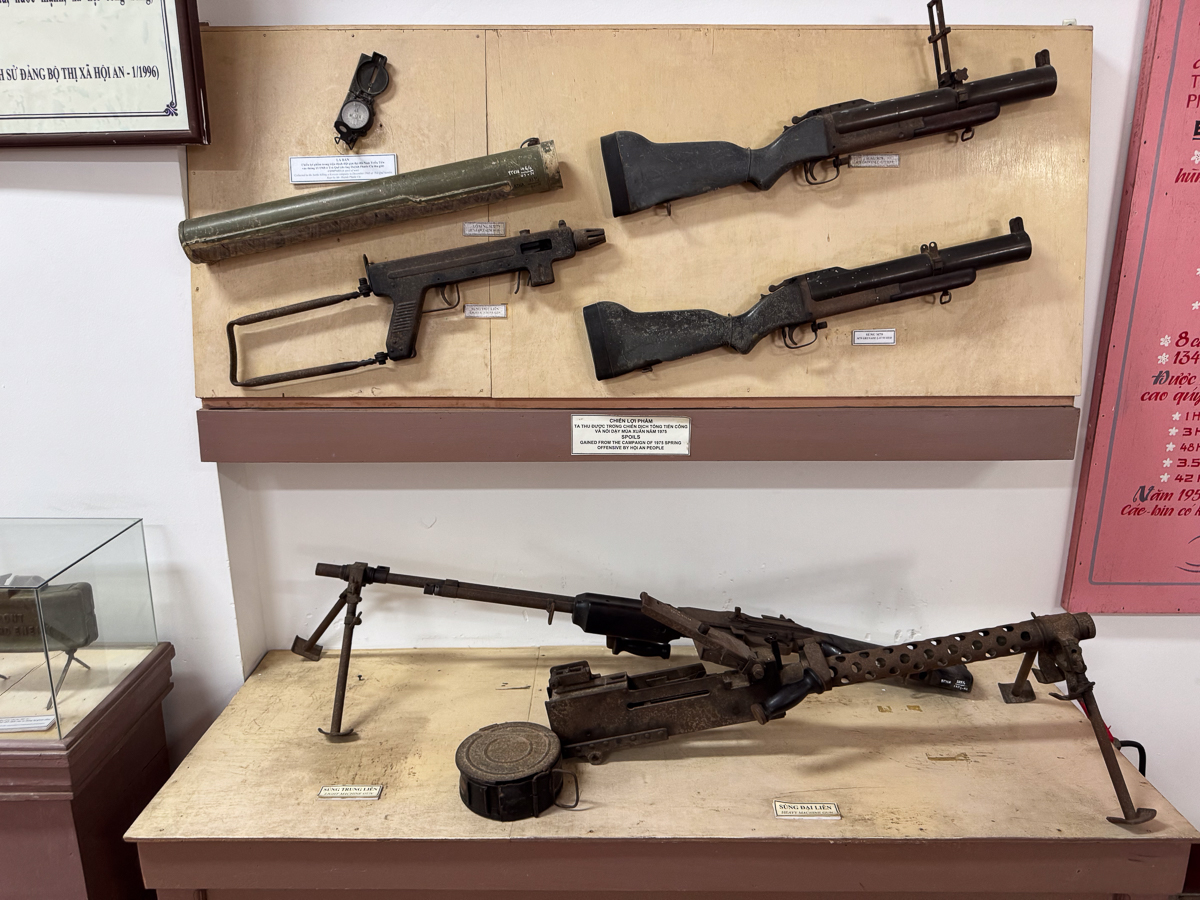
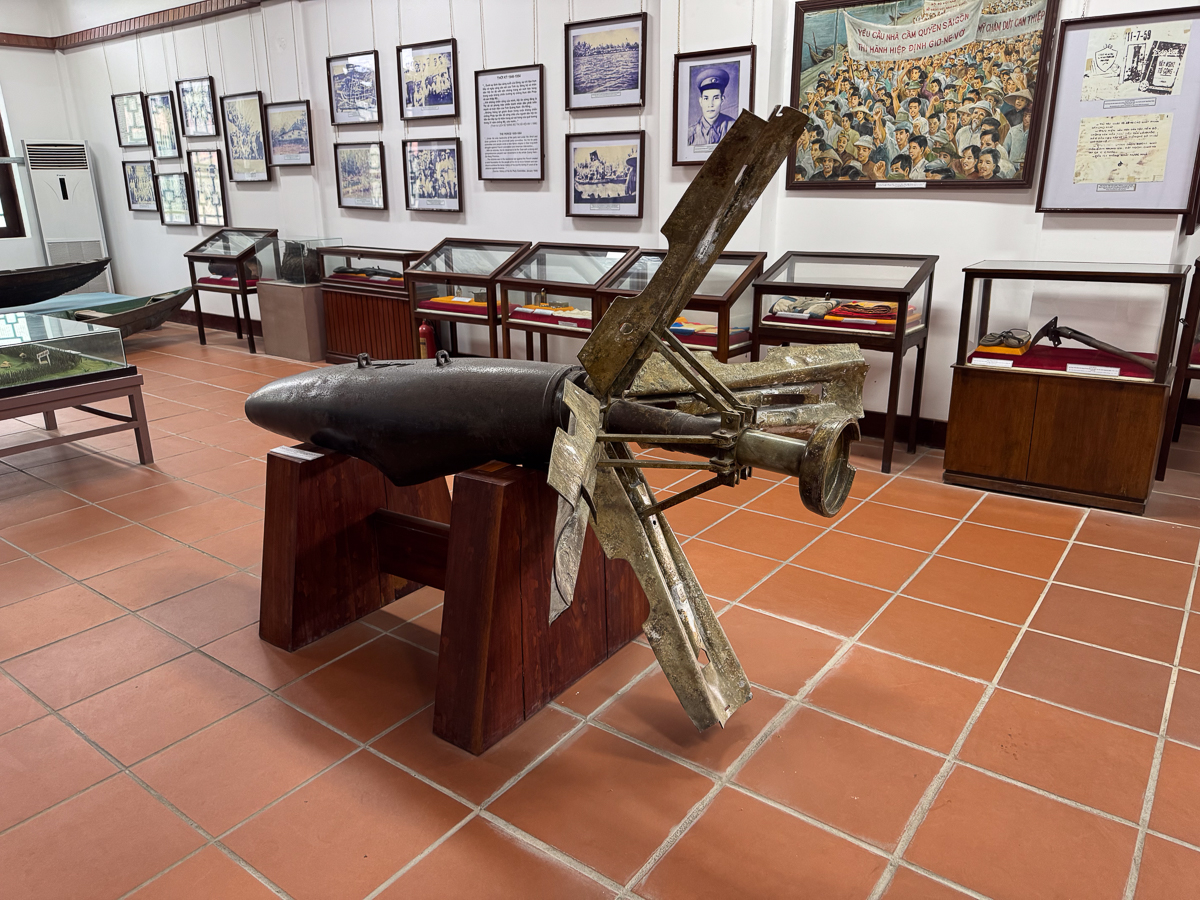
Anyway, the story that I see here in Vietnam is that the war was one of independence, and that they won. Their current government is Communist, specifically: “The Socialist Republic of Vietnam is an authoritarian state ruled by a single party, the Communist Party of Vietnam, led by General Secretary Nguyen Phu Trong.” People seem content for the most part and generally seem to just be living their lives and are friendly and hospitable to tourists being here. They make great food which is affordable and, much like Thailand, is absolutely everywhere.
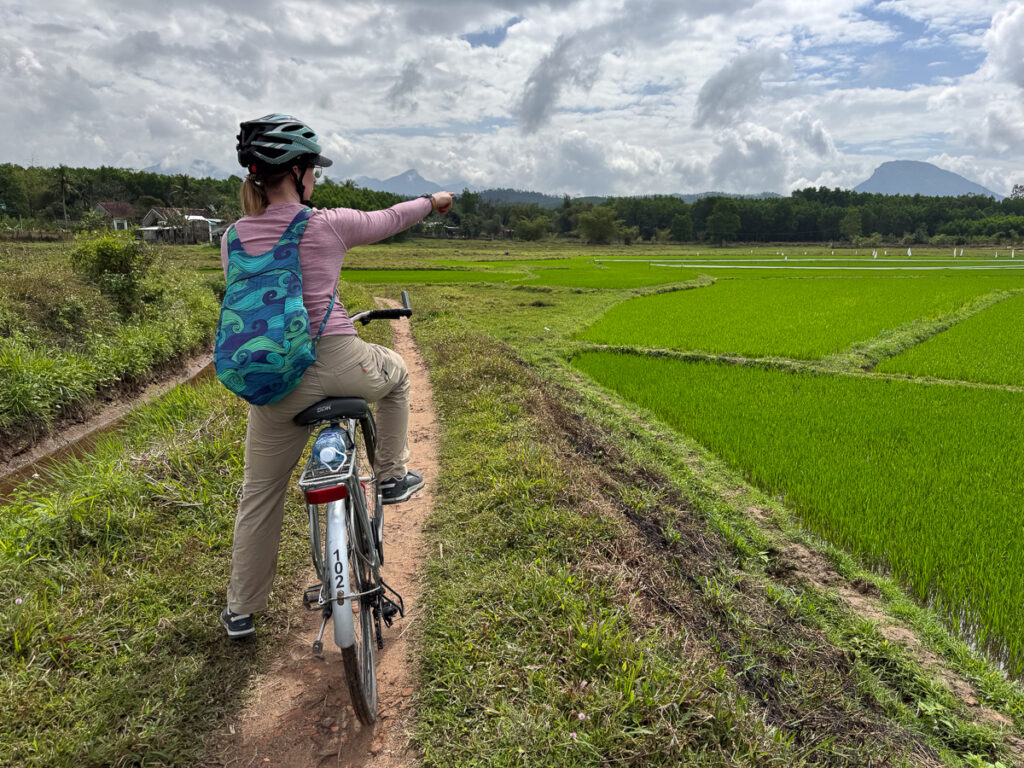
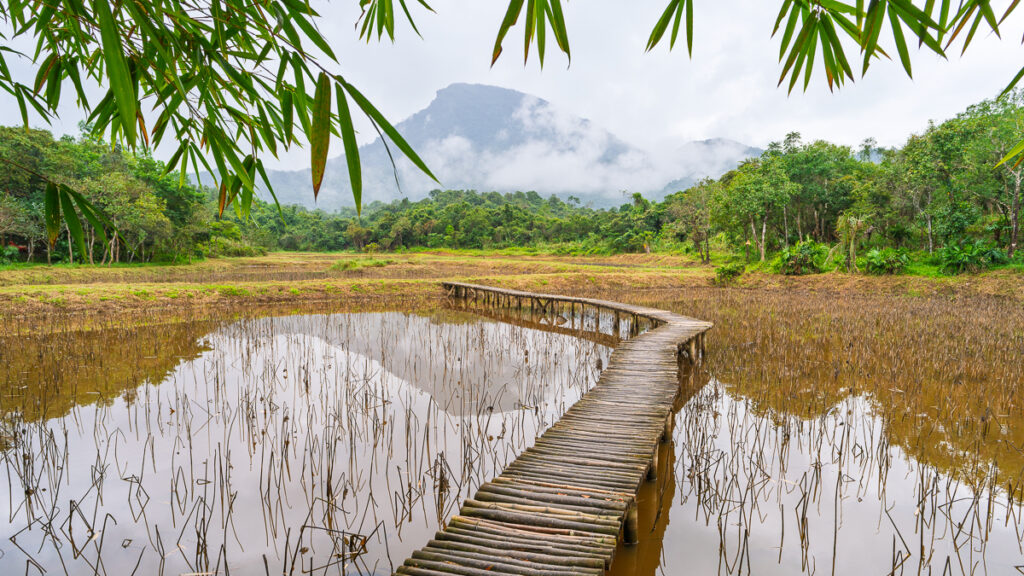
If you drive just a few minutes outside of Hoi An you are met with beautiful mountains on the horizon, rice fields everywhere and usually a few water buffalo. Our guide said that the water buffalo are mostly “retired” and just living their best lives on the farms because most farmers don’t use them to plow anymore. I was also told that the other reason that they keep them is as an investment. Because they can be sold if the family needs money later, he actually said, “they are like a bank.”
Seeing the present-day state of the world from different perspectives paints more details onto my appreciation for the impact western colonization on the world today. The impact of being ruled by another nation while you own culture develops changes things. You see it in the French and Chinese legacy in the architecture and food here in Vietnam. I can’t help but wonder what this country would be like had the American side won the war. Would the Vietnamese people be happier? Would they be more wealthy like South Korea? Or would they have become poverty stricken like Haiti or under some kind of extreme religious rule like Afghanistan?
What I see from my time here just feels like a proud people who are building their communities and living their lives. There is a lot of interest and curiosity about the US here. Our music and entertainment are everywhere. And since it seems that most younger people speak reasonable English, they watch a lot of YouTube ,and Facebook is the social media platform of choice. We’ve talked to some who would like to travel and visit the US, but it’s very cost prohibitive. Wages in Vietnam are quiet low by US standards, which is why things here seem so affordable to us foreigners. It makes eating out affordable for locals, but makes travel to expensive places like the US and western Europe unattainable. So they learn about us from movies and Tiktok.