Unexploded Ordinances in Laos

|

January 24, 2026

Trevis Profile Image

Like most people my age and younger, the war in Vietnam is a distant memory. It was a far away war with objectives that no one seemed to really understand. It caused a lot of pain and suffering for a lot of people.

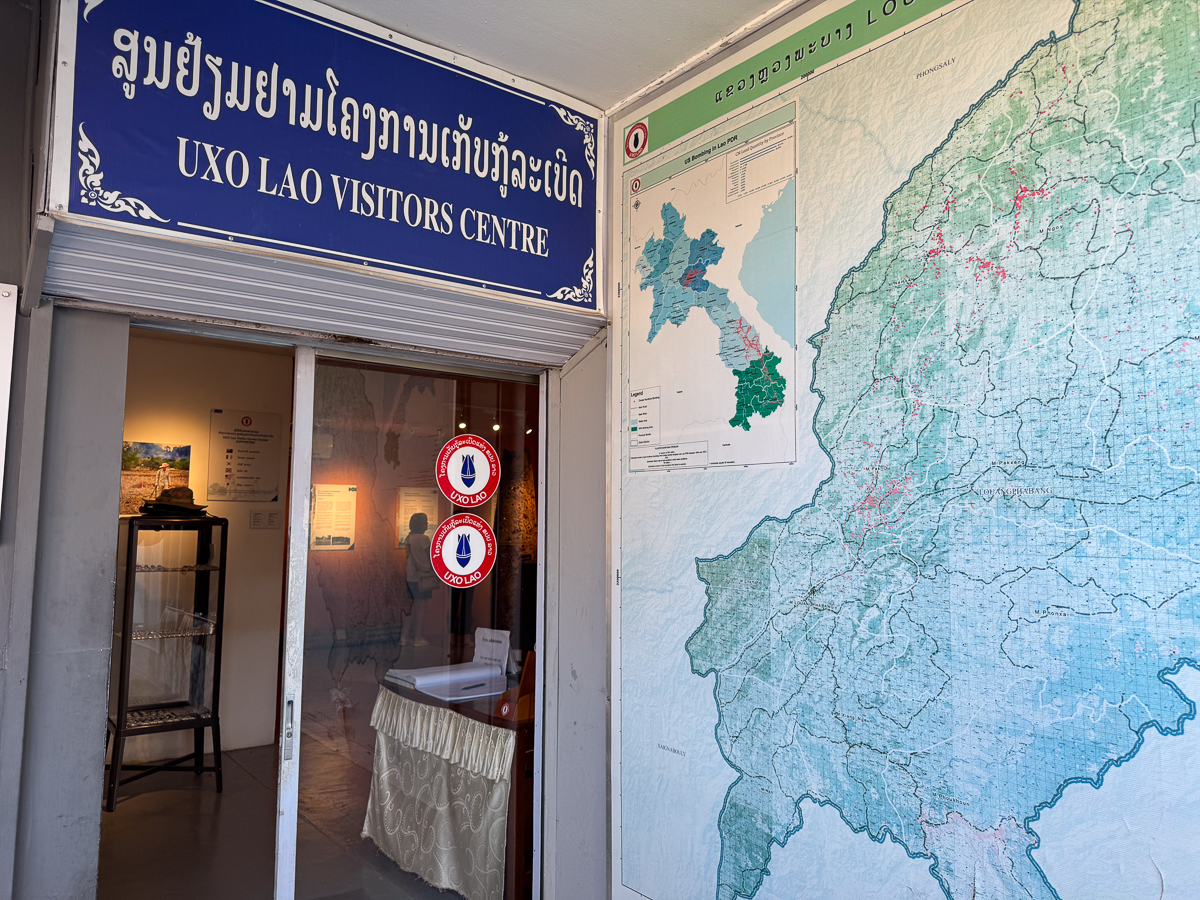
In Luang Prabang, Laos there is a museum called the UXO Museum. UXO stands for Unexploded Ordinances. This means unexploded bombs, rockets and cluster bomb subordinates which were dropped are all over the countryside in Laos.
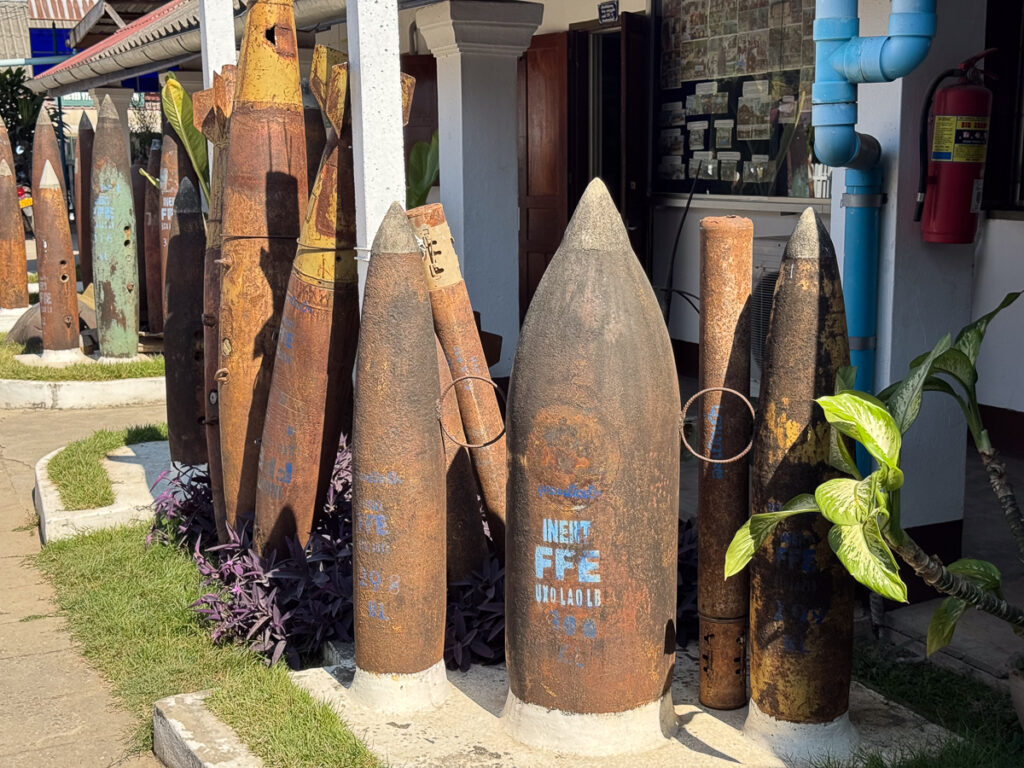
Samples of unexploded ordinances removed from the countryside in Laos.

 The legacy of that war in the United States is largely centered on US Veterans and American prisoners of war, but during our short visit to Laos I was exposed to another side of the conflict in this part of the world. The international community was focused on the official war which was raging in Vietnam, but for almost a decade the US was waging a secret war in Laos. A war in which we did not acknowledge our engagement at all until 1971. And we did not fully disclose the complete extent of our attacks until 2000 when Bill Clinton fully declassified the activity. The bombings of Laos by the United States started in 1964 and ended in 1973.

The campaign, to my understanding, was intended to disrupt the Vietnamese supply lines which went through Laos. During the nine years of combat activity in Laos, the United States bombed Laos 580,000 times! Dropping an estimated 2 million tons of ordinances on the country. To make matters worse, since the war in Laos was not public, there were no declared rules of engagement. The US just bombed everything we could.

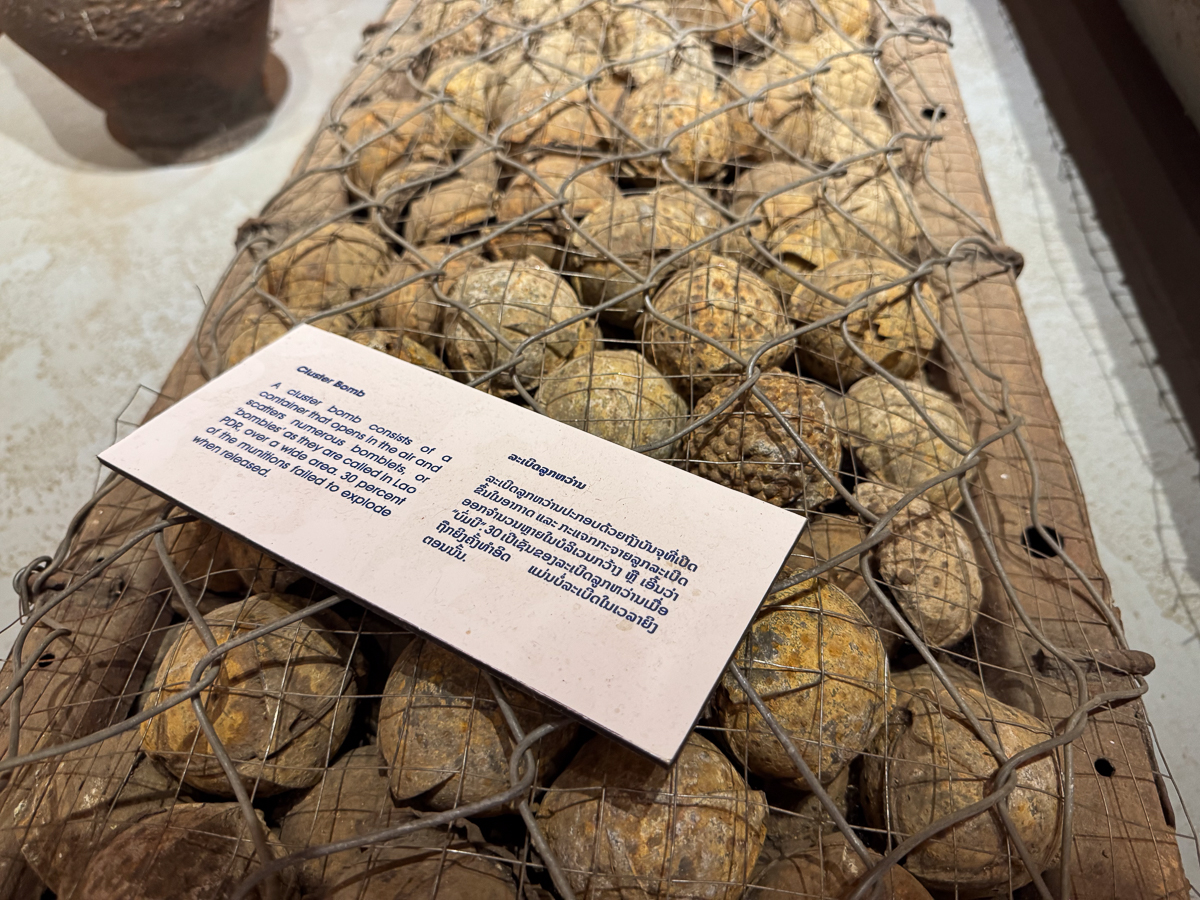
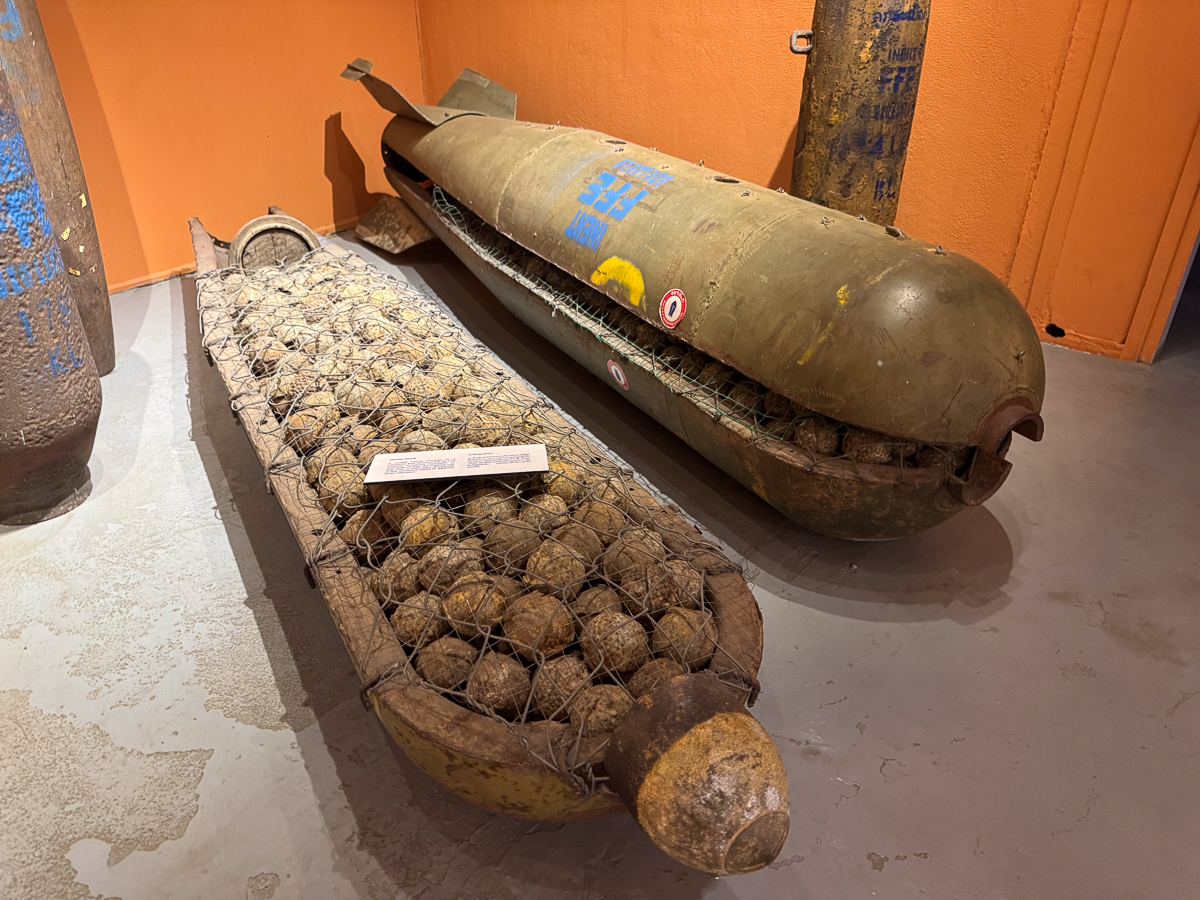
As uncomfortable as this is for me, as an American, the real tragedy is that people are still dying from our bombs. One of the types of bombs that the US used is called a cluster bomb which is basically a large housing which opens up in mid air and releases something like 600-700 tennisball sized bombs to the ground. Of these smaller submunitions that the Lao people call “Bombies,” only about 80% of them exploded on impact. Leaving the remaining 20% to lie dormant in the forests and farms of Laos. These ordinances of a forgotten war have been killing Lao people since before I was born and continue to do so this day.

A partially reassembled cluster bomb recovered from the countryside in Laos

Visiting Laos today, enjoying their warm, welcoming hospitality and delicious, spicy food makes it that much more difficult to stomach my ignorance about what I’m sure America would call an atrocity if another country had done it. How they don’t openly hate us is beyond me.

The purpose of the UXO museum is to educate people about what happened here, but more importantly they have two very practical missions. One is to continue the process of finding and removing the unexploded bombs from their land. The second is to educate their own rural citizens about the very real dangers of these old bombs. Rural farmers and their children are still being maimed and killed when they find these bombs. The subordinates of the cluster bombs are one of the most dangerous because to an unaware child, it just looks like a metal ball. So kids find them and play with them. The museum has video clips of interviews with young survivors giving their first hand accounts of finding these and the harm that it has caused them.

It was very humbling and difficult for me, as an American, to stand in the museum and look at the very real harm that my country caused. And I can’t help but think that 20 years from now, if I’m still around that I’ll be standing in a similar museum somewhere in the Middle East learning about a very similar story.

If you’d like to learn more about the “most bombed country in the world” you can do so here:

Lao National Unexploded Ordnance Program

How do I follow you?

Want to keep up with our latest blog posts when we add them? The best place to do that is on Facebook.  Like and follow our page: Boy vs Girl Slow Travel on Facebook.  We post our blog articles there when they are released.  Facebook well let you know when we have new ones.

Where have we been?

Latest posts about !

Search Blog Posts