A Slow Boat Journey Down the Mekong River

|

January 20, 2026

Avatar photo

As we were planning our nomadic journey, we knew we wanted to spend time in Southeast Asia—especially Thailand and Vietnam. To round out the region and fill the time before heading to New Zealand, we decided to add shorter stays in Malaysia, Cambodia, and Laos. Laos, in particular, wasn’t originally on our must-see list, but that changed once we learned about traveling the country by slow boat along the Mekong River through a couple of Trevis’ travel heroes, the Retirement Travelers, who did the cruise and loved it.

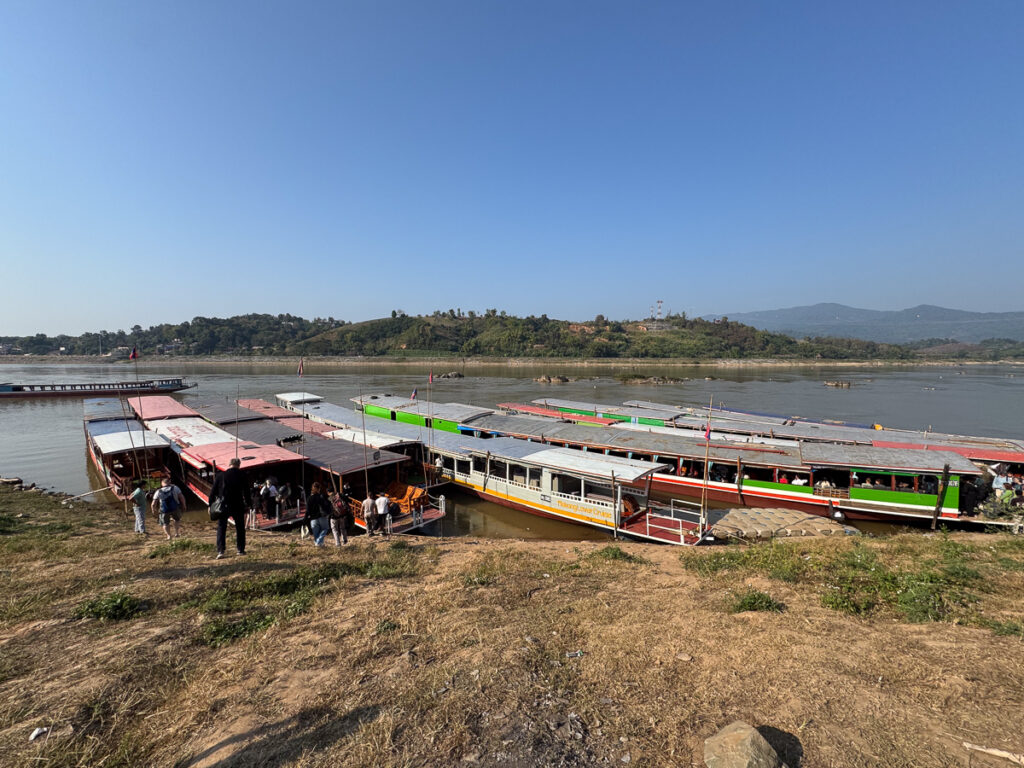
Houayxay, Laos. Where the slow boats start.

The Mekong and the Slow Boat

The Mekong River is the longest river in Southeast Asia, traveling about 2,700 miles from China through Myanmar, Laos, Thailand, Cambodia, and Vietnam before emptying into the South China Sea. The river, while difficult to navigate in places, has long been used for fishing as well as for transport of goods, and people, along its length. In recent years businesses like Shompoo Cruises, which we chose, have brought tourism to the region by offering river cruises on their traditional slow-boats.

The journey officially starts in Laos, not Thailand, which meant we needed to cross the border first.

Crossing Into Laos and Boarding the Boat

Our day began early, with hotel pickup around 7:40 a.m. We traveled by van with a small group of other passengers to Friendship Bridge #4, where our cruise operator guided us through Thai exit immigration and Lao entry procedures. The logistics were well organized, with assistance at every step, even though there were a few minor hiccups and delays along the way.

For U.S. citizens, a visa is required for Laos. We opted for an eVisa ahead of time, which usually saves time, though computer issues that morning meant it wasn’t quite as efficient as expected. Either way, the process was smooth. There was also a small cash fee at the border—nothing significant, but worth knowing about.

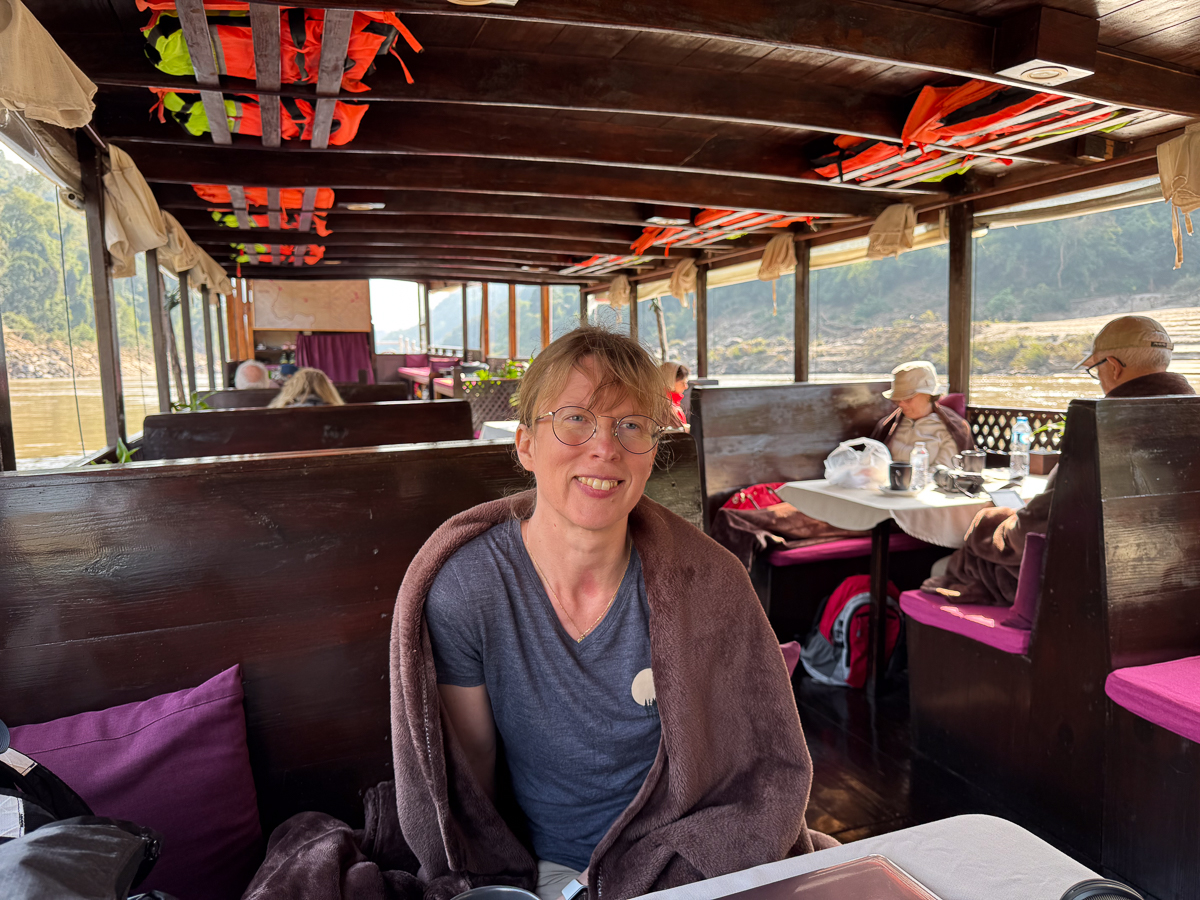
Once in Laos, we boarded another shuttle that took us down to the river, arriving at the boat launch around 9:30 a.m. Porters handled our luggage, and we filed onto the long boat just in time for the safety and orientation briefing: bathrooms in the back, coffee and tea available, life jackets overhead (hopefully unnecessary).

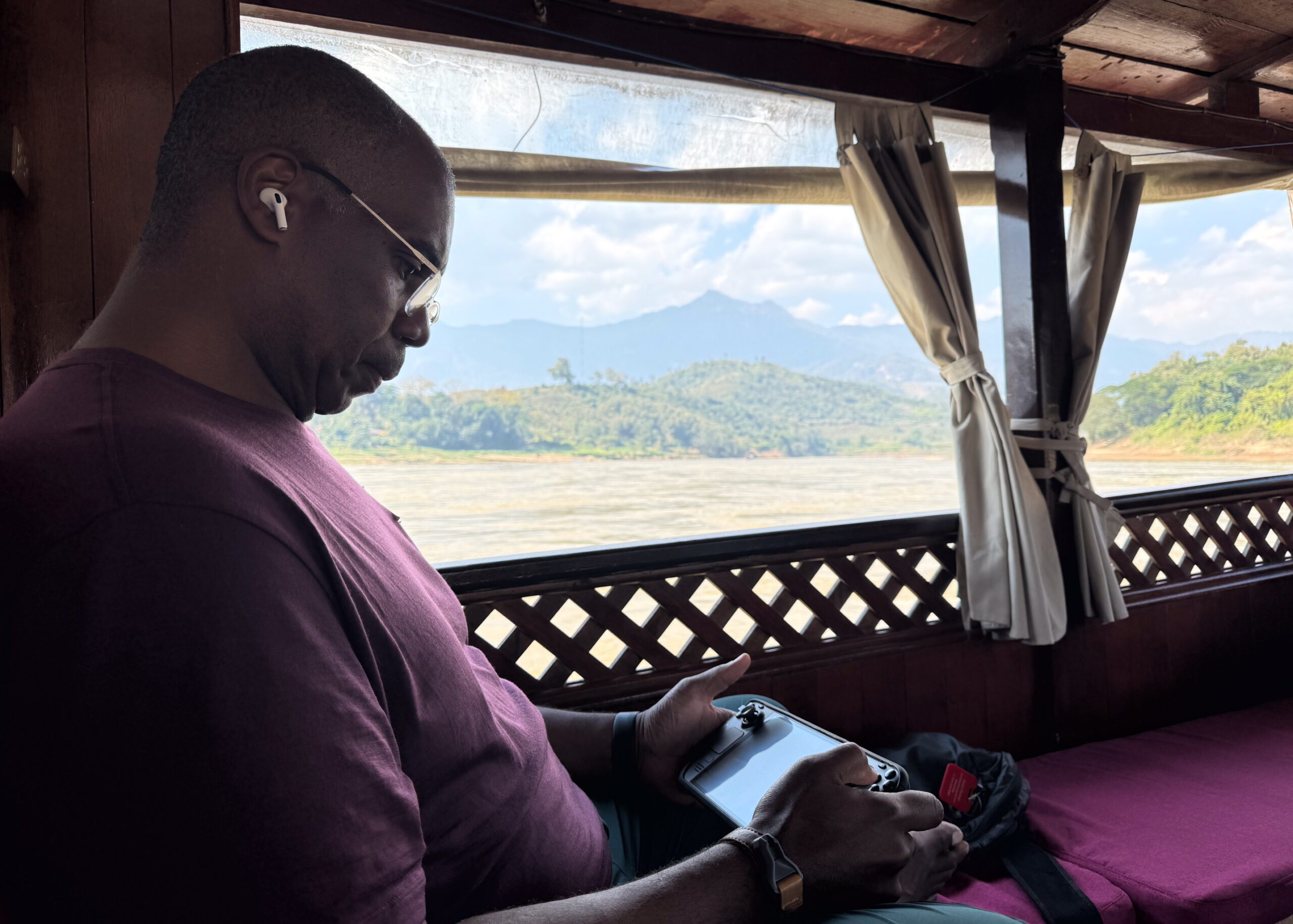
We were among the last to board, and at first, the seating situation was… less than ideal. Most of the best spots seemed to be taken, and the boat felt crowded. After poking around a bit, Trevis noticed that the smoking section at the back—despite the name—was mostly empty and no one was smoking there. We relocated and quickly realized it had some of the best views on the boat, not only to the sides, but straight downriver as well. We spent most of the day there, returning to the front only briefly for lunch.
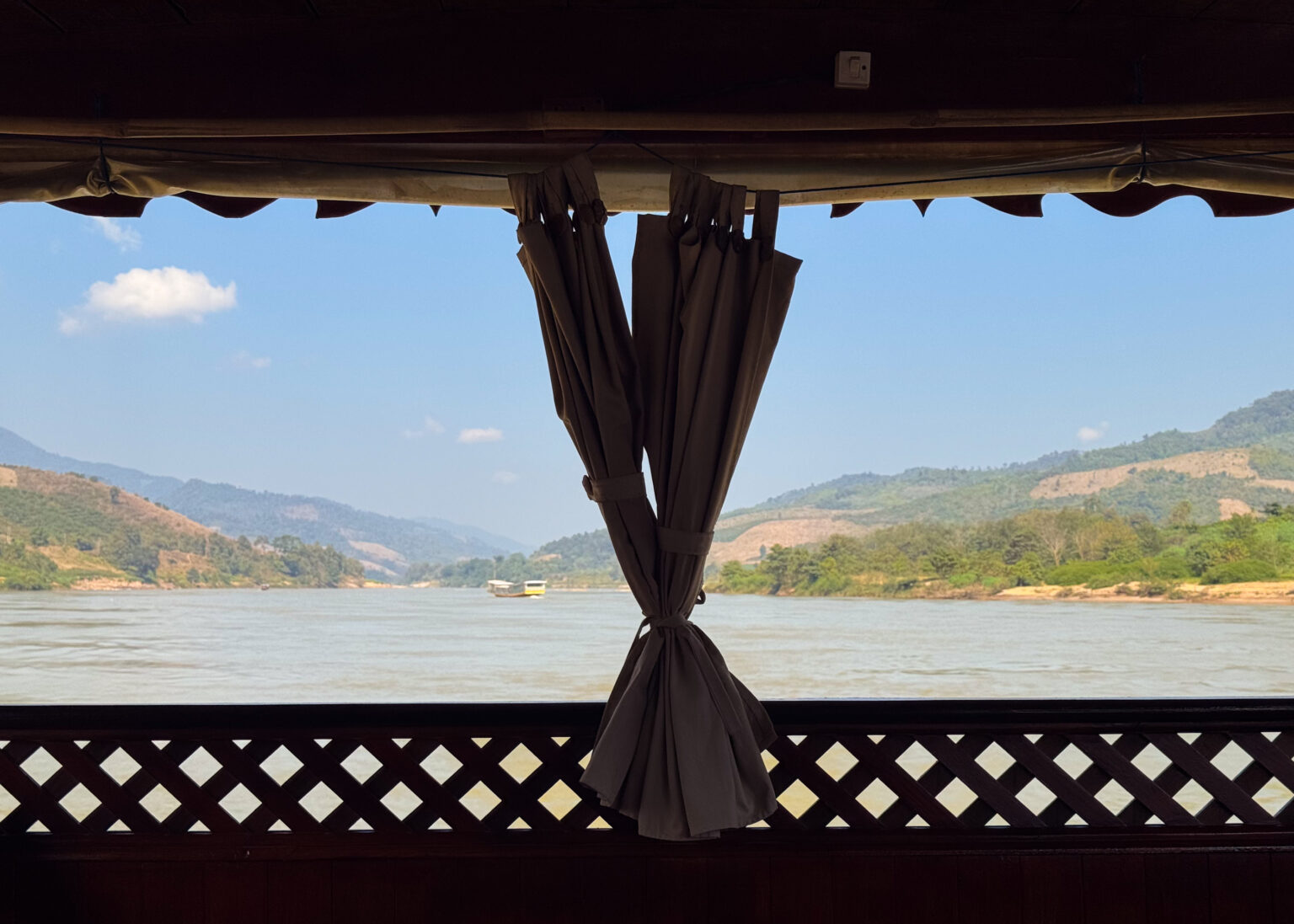
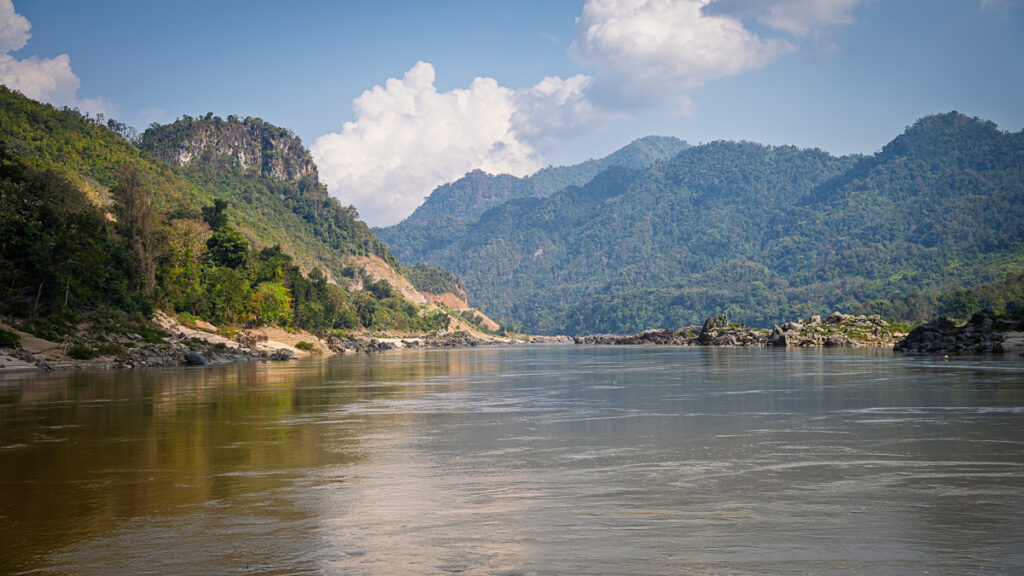
Mekong River

Life on the River

The slow boat journey to Luang Prabang takes two days, with an overnight stop in Pakbeng roughly halfway along the route. You don’t sleep on the boat; accommodations in Pakbeng are included as part of the cruise.
So what do you do all day on a boat?

Mostly, you relax. The Mekong winds through forested mountains, revealing new scenery around every bend—steep hillsides, small riverside farms, waterfalls, and villages clinging to the slopes. We watched fishermen casting nets, people washing clothes along the riverbanks, and, surprisingly, quite a few locals panning for gold.

There’s also plenty of downtime to read, write, play cards, or chat with fellow travelers. Most passengers spoke English, though many were European or Australian. Coffee, tea, water, and fresh fruit were available throughout the day, with beer, soda, and spirits for purchase. Lunch both days was served buffet-style, with a mix of meat and vegetable options.

That said, the experience can vary wildly depending on the crowd.

On the first day, the boat was full. We both found it uncomfortably crowded and spent much of the day wondering whether this had been a mistake—and whether the train to Luang Prabang would have been the better choice.

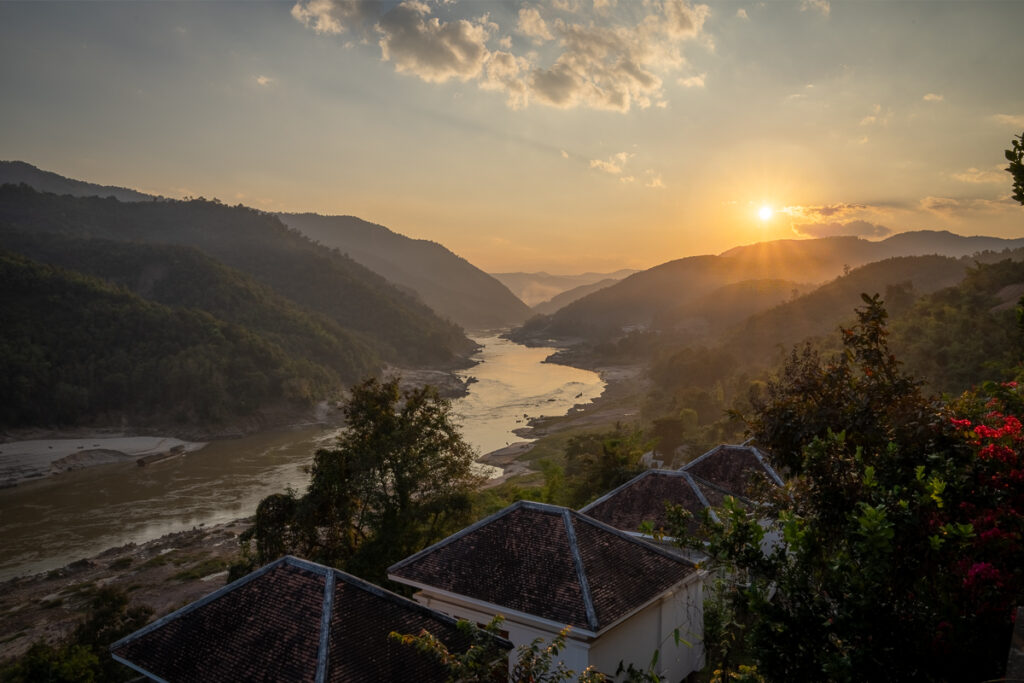
Le Grand Pakbeng. Pakbeng, Laos

Pakbeng: A Welcome Pause
Our cruise included an overnight stay at a choice of hotels in Pakbeng, and we opted to stay two nights instead of one, at Le Grand Pakbeng. That decision turned out to be a great one.

Pakbeng itself is small and quiet, and the extra day gave us a chance to slow down even more. The hotel is on top of a hill at the edge of town, peaceful and remote. Most of the guests left on the boat again the next morning, leaving us as the only guests at the hotel until another boatload arrived in the afternoon. The staff even prepared lunch for us, which was especially appreciated given the lack of nearby restaurants.

January is the dry season, and mornings in Pakbeng tend to be foggy, with clouds lifting by mid-morning to reveal mountain views that feel almost unreal. Watching the landscape slowly emerge from the mist was worth the extra night on its own. Other than visiting the local elephant sanctuary—a stop we skipped since we’d just done that in Chiang Mai—there isn’t much to “do” in Pakbeng, and that suited us just fine.

Ah, space to relax

Day Two: A Different Experience

The second day of cruising began early again, with a shuttle back to the boat launch around 7:30 a.m. This time, we were among the first passengers to board and claimed a table—one that, to our surprise, we didn’t have to share since the boat was barely half full.

The difference was night and day. With room to spread out and fewer people onboard, the experience became more what we’d hoped for: calm, scenic, and unhurried. We’re not sure why one day was so much more crowded than the other—it didn’t seem to be the result of any choice that we made during booking.

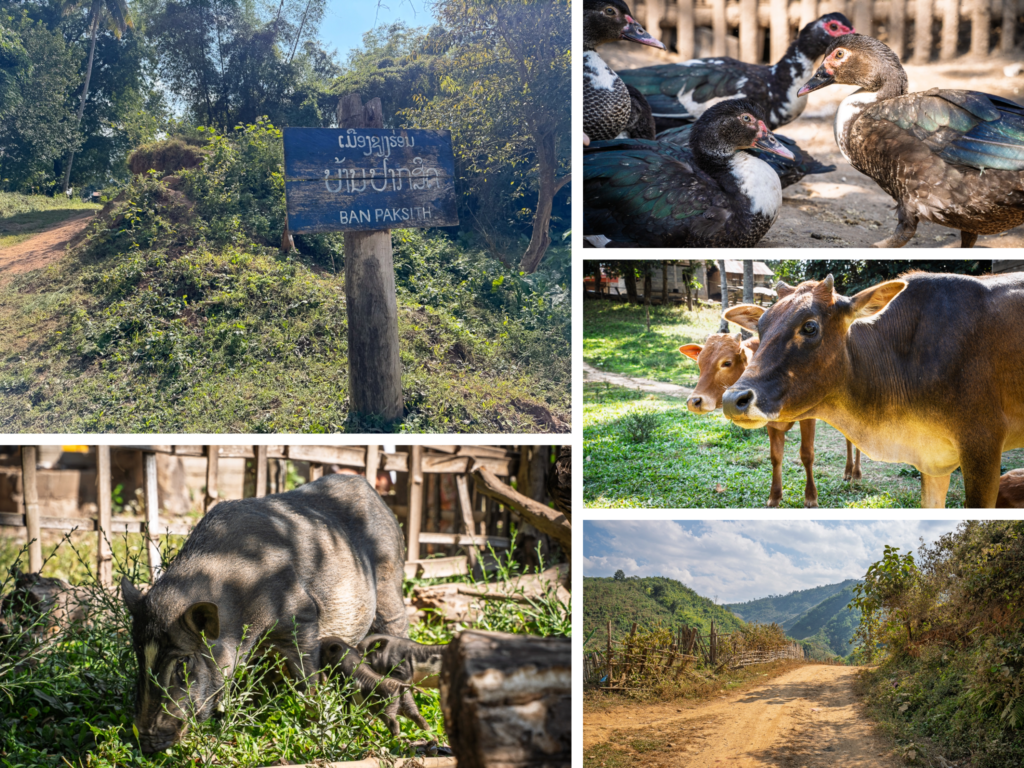
Ban Paksith Village, Laos

Stops Along the Way

The cruise includes several stops to break up the journey. On the first day, we visited a small rural village supported in part by the cruise company and the Red Cross. The guide explained aspects of village life and invited us to walk around and interact with residents. While it was interesting, it also felt a bit uncomfortable, and we were both ready to return to the boat fairly quickly.

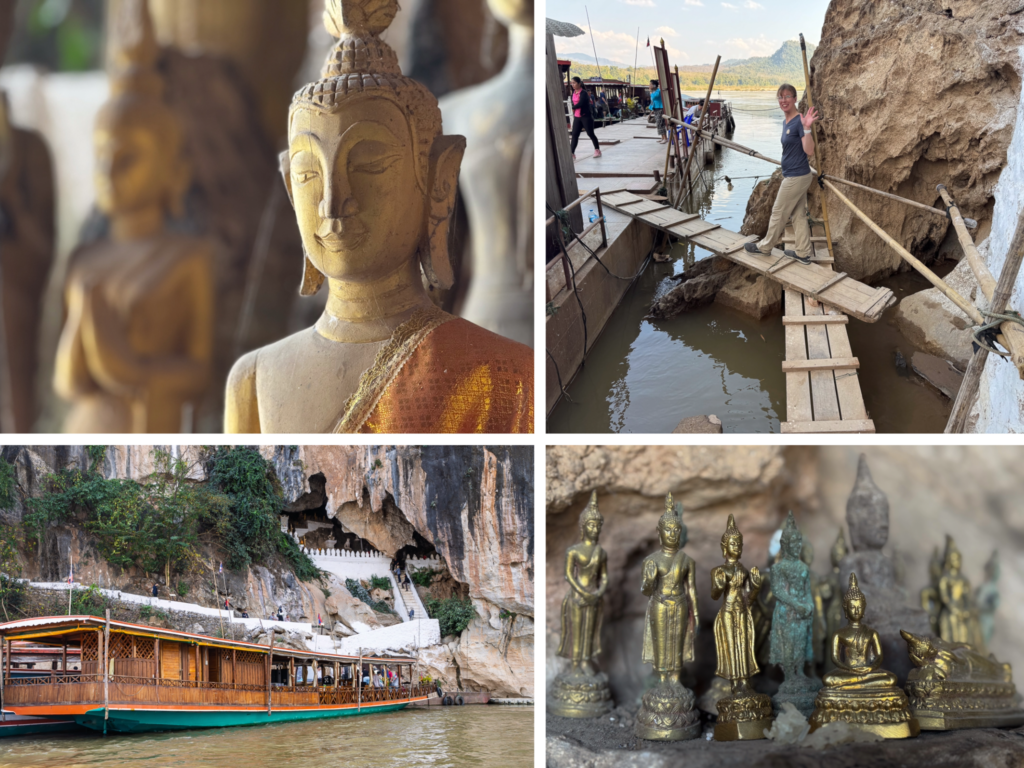
The second day had two stops. One was the Pak Ou Caves, a pilgrimage site for Buddhists set into limestone cliffs along the river. The caves are filled with hundreds of Buddha statues left by worshippers over generations. The lower cave is easily accessible, while the upper cave requires a bit of a climb up several flights of stairs.

The final stop was Bang Xang Hai, a village near Luang Prabang known informally as “Whiskey Village,” where locals distill rice wine and whiskey. There were also vendors selling traditional textiles and souvenirs. Trevis picked up a bottle of the rice whiskey—it’s a little harsh but has an interesting flavor distinctly different from corn-based whiskey back home.

Pak Ou Cave, Laos

Arrival in Luang Prabang

By late afternoon, the boat approached Luang Prabang, docking just before sunset. Taxis were waiting at the pier, and our guide helped arrange rides to everyone’s hotels even though our accommodation wasn’t booked through the cruise.

Looking back, the slow boat wasn’t perfect, but it was memorable. It offered a peaceful way to see northern Laos, to watch daily life along the river, and to move between countries without airports or tight schedules. Even with a rocky first day, it ended up being a fitting introduction to Laos—and a reminder that sometimes slowing down is the whole point.

How do I follow you?

Want to keep up with our latest blog posts when we add them? The best place to do that is on Facebook.  Like and follow our page: Boy vs Girl Slow Travel on Facebook.  We post our blog articles there when they are released.  Facebook well let you know when we have new ones.

Where have we been?

Latest posts about !

Search Blog Posts