During our one full day in Chiang Rai we had a whirlwind tour to see some of the highlights in the area. We visited Wat Rong Khun (the White Temple), Wat Rong Seur Ten (Blue Temple), Baan Dam Museum (the Black House), House of Opium, Chui Fong Tea Plantation, Golden Triangle and a Padaung Village (the Karen Longneck ). It was quite a lot in one day but it was great to get a taste of everything.
A tip for anyone planning to visit Chiang Rai. If you’re going to do it, plan to stay for at least one night. There are tours of Chiang Rai from Chiang Mai but they are not that close together. It’s about a 3 hour car ride. Coming here and going back in the same day would have you spending most of your time on the road. Chiang Rai is smaller and feels like it moves at a slower pace than Chiang Mai, so you might enjoy spending even longer here.
Wat Rong Khun (The White Temple)
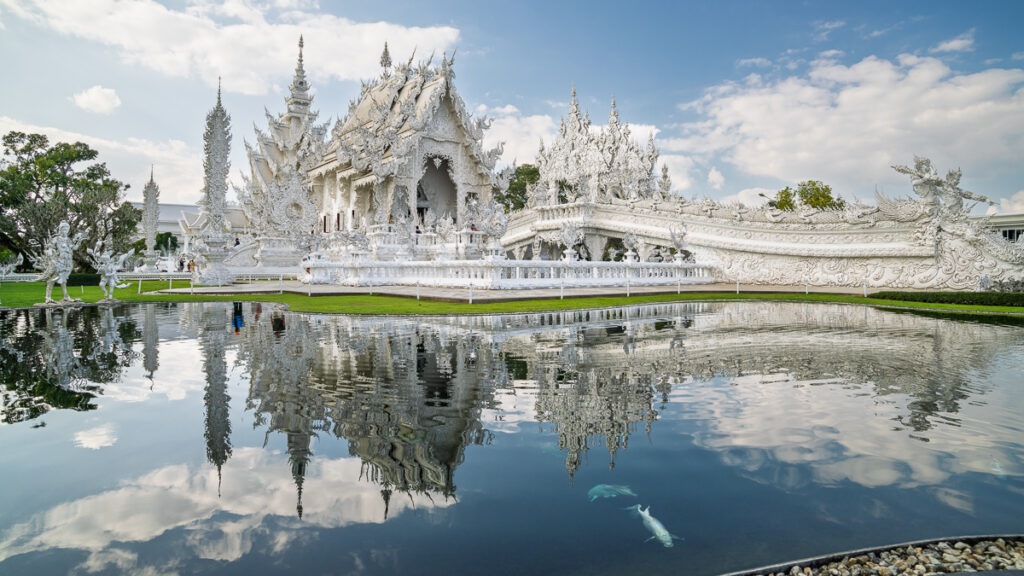
We actually visited Wat Rong Khun (the White Temple) twice because we saw it the day before as a detour on our ride from Chiang Mai to Chiang Rai.
The White Temple was the main thing that I was interested in seeing in Chiang Rai and it did not disappoint. It’s a passion project fully funded by the artist who designed it, Chalermchai Kositpipat.
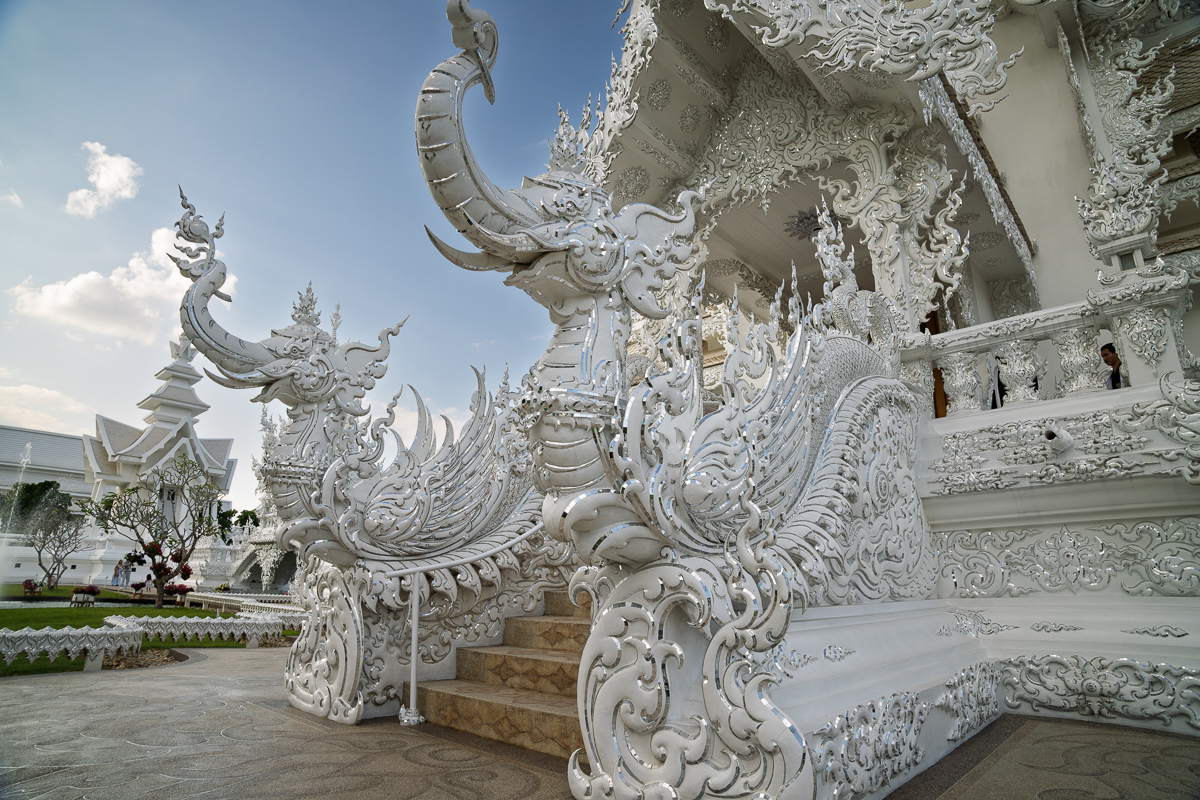
It’s an incredible work of art, and is also a Buddhist temple. The photos I’ve shared are mostly of the instagramable architecture. But there is a lot of really unusual stuff in and around the temple. The photo above is at the entry way to the temple. We were told that it represents hell. Inside of the temple itself on the wall behind you as you enter is a mural with a lot of contemporary figures. Everything from Angry Birds to Micheal Jackson, from Neo from The Matrix to a pictorial of 911.
No photos were allowed inside, unfortunately. Along the right side wall is a 4 image pictorial which shows the path from human suffering to enlightenment. The other side depicts birth to death and reincarnation. At the front is of course a statue of Buddha.
Wat Rong Seur Ten (Blue Temple)
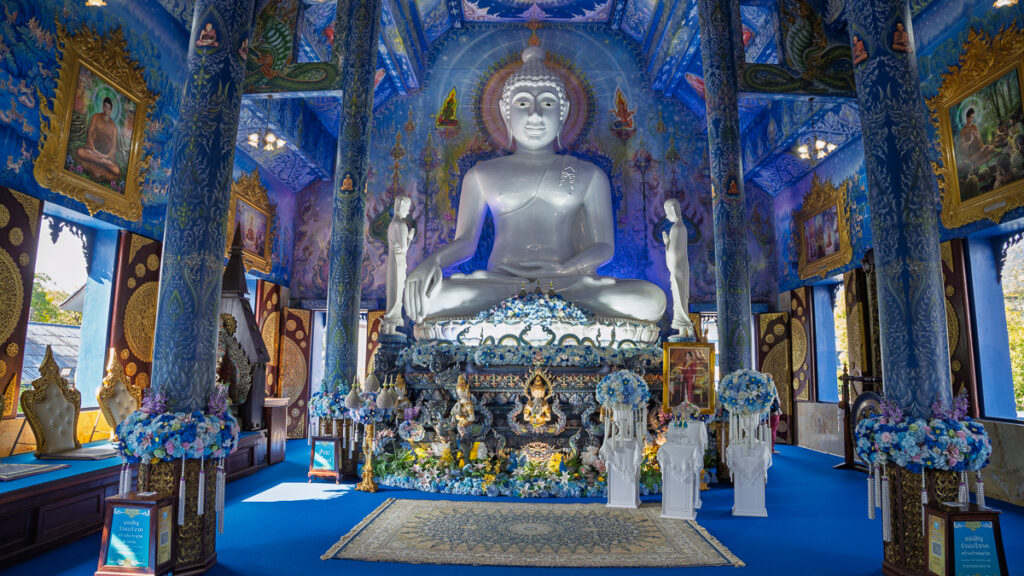
The Blue Temple was at one time an abandoned Buddhist temple which was completely restored by a local artist Phuttha Kabkaew, who learned from Chalermchai Kositpipat, the designer of the white temple. While the white temple was funded by the wealthy designer, the blue temple restoration which took place between 2005 and 2016 has been funded by donations.
It’s a very different location than the white temple and is worth a visit. It lacks the over the top, dare I say whimsy of modern culture icons and political figures, but the artist work throughout is very impressive. The huge white buddha at the front of the main temple is incredible.
Baan Dam Museum (The Black House)
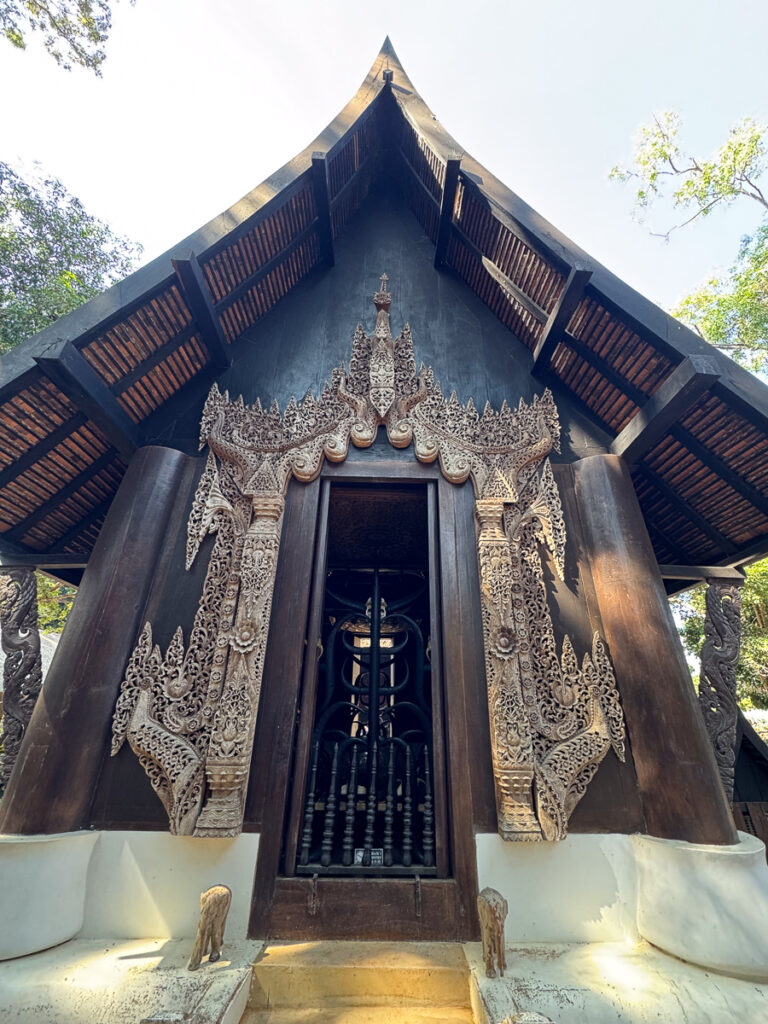
The Baan Dam museum is dedicated to the Thai artist Thawan Duchane. His work is prolific and mostly depicts animals in ferocious poses. The museum houses his extensive collection of animal remains. Crocodile skins, python skins, elephant bones, etc. The complex contains over 40 small buildings with various art work and items from his collection. His style is somewhat macabre but also whimsical. I’m told that the paintings on site are reproductions because the originals are very expensive.
Padaung Village ( The Karen Longneck )
I didn’t take many photos here because I’m just not comfortable when it feels like people are being reduced to a side show. I’m glad that we were able to visit the village and see how some of the “long neck” tribe lives. I’m told that they are foreign refugees who are living on rented land in Thailand. Thailand does not have birthright citizenship so their children are not automatically Thai citizens. The way I understand it, most of their children attend school in Thailand and learn the same things that Thai kids learn. Once they are older, they can take a test to become citizens which is apparently quiet easy for them since they know the language, history and culture as well as other Thai since they were educated in Thailand. That makes things easy for the kids, but it’s not so easy for the parents who don’t speak the language.
The metal rings that they wear on their necks are quiet heavy and once they put them on, they rarely take them off. It’s a non-trivial process of heating and bending the metal. A full set can weigh over 4 kilograms! The kids who attend Thai school don’t wear the rings. Some of them have special removable ones that they can wear for appearances but it’s not the same as the older Karen women. It seems pretty likely that this culture will disappear in our lifetimes.
Our guide said that the most common story about the history of the rings is that they were to protect the women if they were to be attacked by a tiger because Tigers tend to go for the neck. There haven’t been wild tigers in this area for a long time, but the culture still remains.
One other interesting tidbit. The Karen don’t share a single religion. They are a mix of Buddhists and Christian believers but they live together in the same community and share the Karen culture in common.
The Golden Triangle
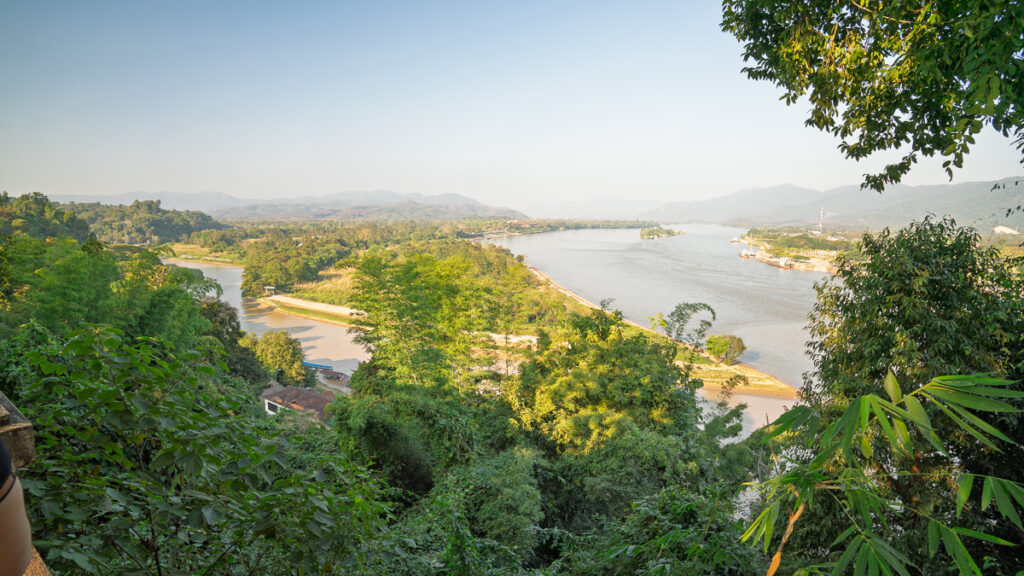
This is the “golden triangle.” It’s where Thailand, Myanmar and Laos meet. This was the epicenter of the opium trade for many years before the Thai queen decided to stop it. So I’m told. It was the perfect spot because it had access via two rivers and three countries. The name golden triangle was given because the international trade was conducted in gold. One kilogram of gold was worth the same price as the same weight of opium so they didn’t need to deal with each country’s currency.
House of Opium Museum
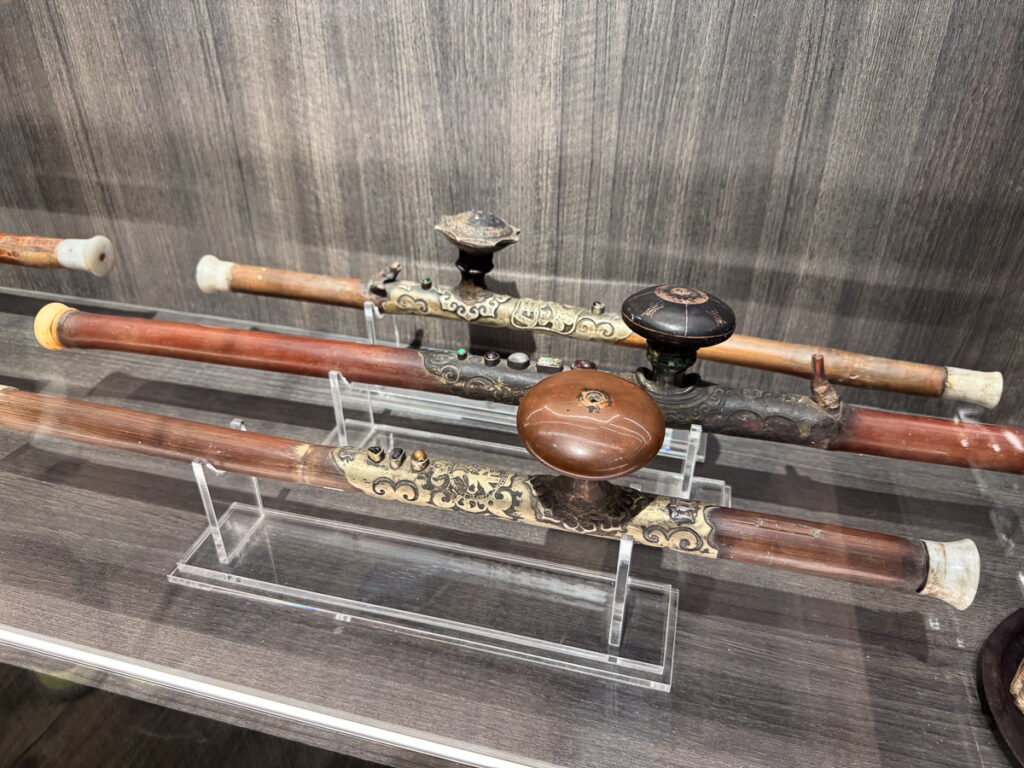
This was a great museum and something quite different. It tells the history of opium development and trade in the area.
It shows how the plant is harvested, how the narcotic is extracted and how it is used. It also talks about the various military conflicts and social reactions to their populations becoming addicted.
There were two wars between China and Great Britain fought primarily over Opium. China was fighting to keep opium out of their country because it was harming its citizens, Britain wanted the opium trade to continue because it was highly lucrative for its colonies in India. China lost this battle which, to my understanding, is a part of how Hong Kong came under British control, and remained that way until 1997 when the 156 year British rule ended.